1. Introduction: How to Bake a Cake Without an Oven
Have you ever wanted to bake a delicious homemade cake but discovered that you do not have an oven? Perhaps you are a beginner who wants to learn cake baking, or you are planning to start a small cake business from home but cannot afford professional baking equipment yet. The good news is that you do not necessarily need an electric or industrial oven to make a delicious cake. You can successfully bake a soft, fluffy and tasty cake using an ordinary cooking pot and a gas cooker.
Learning how to bake a cake without an oven is a useful skill for beginners, home bakers and aspiring bakery business owners in Nigeria. With the right ingredients, a suitable cooking pot, proper measurements and a little patience, you can prepare a beautiful homemade cake using simple kitchen materials.
Whether you live in Lagos, Abuja, Port Harcourt, Ibadan, Enugu or another part of Nigeria, this method can help you get started with cake baking without investing in expensive equipment immediately.
In this detailed guide, you will learn how to bake a cake step by step without an oven. We will explain the ingredients you need, the measurements, the baking equipment, how to mix your cake batter, how to prepare your cooking pot and how to determine when your cake is ready.
If you are completely new to baking, do not worry. Follow these instructions carefully, and you will be able to prepare your first homemade cake.
2. Can You Bake a Cake Without an Oven?
Yes! You can bake a cake without a conventional oven by using a suitable heavy-bottomed cooking pot with a tight-fitting lid and a heat-resistant stand inside it.
The principle is simple. A covered pot traps hot air and creates an enclosed cooking environment. When placed over low, controlled heat, the pot gradually heats the cake tin and allows the cake batter to cook.
This method is sometimes called stovetop baking or pot baking.
It is particularly useful for people who do not own an electric oven, gas oven or professional bakery oven. You can use a suitable gas cooker or another controlled stovetop heat source.
However, successful pot baking requires proper heat management. If the flame is too high, the bottom of the cake may burn before the middle is completely cooked. That is why using a stand or trivet inside the pot is important.
Advantages of baking a cake without an oven:
- You do not need an electric or conventional gas oven.
- You can start baking with basic kitchen equipment.
- It is suitable for beginners learning cake preparation.
- You can prepare small cakes for family and friends.
- It provides an affordable way to practise baking skills.
- It helps aspiring cake entrepreneurs learn basic production techniques.
Although this method is useful for beginners, commercial cake production may eventually require a proper baking oven for greater capacity, temperature control and consistent results.
3. Ingredients Needed to Bake a Cake Without an Oven
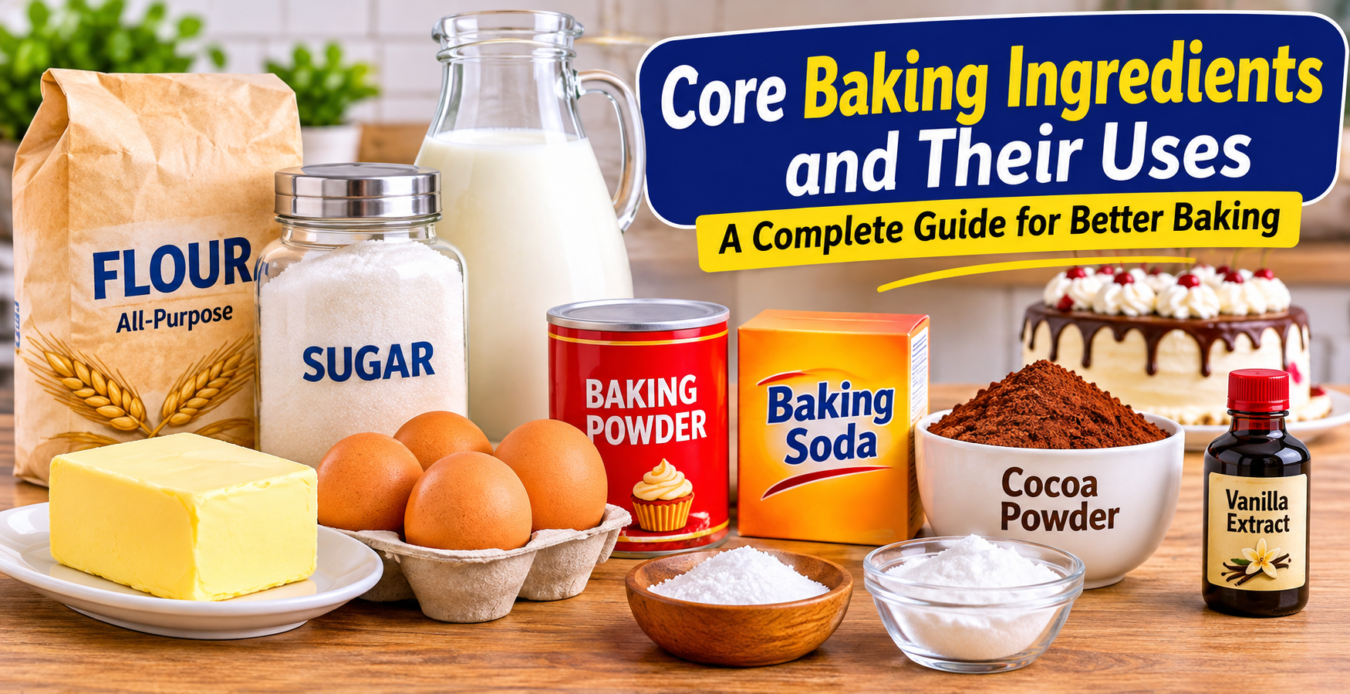
Before you begin, gather all your ingredients. Using the correct quantities is important because baking depends on the proper balance of flour, fat, sugar, eggs and liquid.
For this beginner-friendly recipe, we will prepare a simple vanilla butter cake.
Cake Ingredients and Measurements
| Ingredients | Quantity |
|---|---|
| All-purpose baking flour | 250g (2 cups, approximately) |
| Granulated sugar | 150g (¾ cup) |
| Margarine or baking butter | 150g |
| Eggs | 3 medium-sized |
| Milk | 120ml (½ cup) |
| Baking powder | 2 teaspoons |
| Vanilla flavour | 1 teaspoon |
| Salt | ¼ teaspoon |
Note: Cup measurements are approximate. A digital kitchen scale provides more accurate and consistent results.
Understanding the Functions of Each Ingredient
1. Flour: Flour provides the main structure of your cake. It forms the foundation that holds the other ingredients together. All-purpose flour is suitable for this beginner-friendly recipe.
2. Sugar: Sugar gives the cake sweetness and contributes to moisture retention, browning and texture.
3. Margarine or Butter: Margarine and butter provide richness, flavour and softness. They also help create a tender cake texture.
4. Eggs: Eggs bind ingredients together and provide structure. They also contribute to the cake’s colour, moisture and texture.
5. Milk: Milk adds moisture and improves the flavour and richness of the cake.
6. Baking Powder: Baking powder helps the cake rise by releasing carbon dioxide during baking. It is responsible for much of the lightness and volume in this recipe.
7. Vanilla Flavour: Vanilla gives your cake a pleasant aroma and flavour. You can also experiment with other food-grade baking flavours.
8. Salt: A small quantity of salt balances the sweetness and enhances the overall flavour.
4. Baking Equipment and Materials You Need
You do not need complicated equipment to begin baking a cake at home. However, having the correct materials makes the process easier and helps you achieve better results.
Here are the essential baking materials for this recipe:
- A large mixing bowl.
- A smaller bowl for mixing dry ingredients.
- A measuring scale or measuring cups.
- A hand whisk or electric mixer.
- A spatula.
- A cake baking pan, preferably 7 inches.
- Baking parchment or greaseproof paper.
- A large, heavy-bottomed cooking pot with a lid.
- A heat-resistant metal trivet or cake stand.
- A toothpick or wooden skewer.
- A cooling rack.
Important safety note: Use a stable, heat-resistant stand inside the pot to keep the cake pan away from direct contact with the bottom. Never place a cake tin directly on the flame or pot base. Do not use a sealed pressure cooker as an improvised baking pot. Follow the cookware manufacturer’s instructions and ensure that the pot and lid are suitable for stovetop use.
5. How to Bake a Cake Step by Step Without an Oven
Now that you have your ingredients and equipment ready, let us go through the actual baking process.
Follow these eight steps carefully to prepare your homemade vanilla cake.
Step 1: Prepare Your Ingredients
Start by measuring all your ingredients according to the recipe.
Remove the margarine or butter from the refrigerator ahead of time if necessary, so it becomes soft enough to mix easily. Crack your eggs into a separate bowl and check that they are fresh.
Measure your flour, sugar, baking powder, milk and vanilla flavour.
Preparing everything before mixing is important because it makes the baking process easier and helps you avoid forgetting any ingredients.
Beginner’s tip: Do not estimate ingredient quantities by eye. Use a digital kitchen scale whenever possible.
Step 2: Prepare Your Cooking Pot
This is one of the most important steps when learning how to bake a cake without an oven.
Get a large, heavy-bottomed cooking pot with a suitable lid. Place a stable metal trivet or heat-resistant stand inside the pot.
The stand should be high enough to keep your cake pan away from the bottom of the pot.
Cover the pot and preheat it over low heat for approximately 5–10 minutes, following the cookware manufacturer’s guidance.
Do not add water. This is a dry stovetop baking method, not steaming.
Important: Never allow the cake pan to touch the direct heat source. Keep the flame low and controlled throughout baking.
Step 3: Prepare Your Cake Baking Pan
Take your 7-inch cake pan and grease the inside with a small quantity of margarine or butter.
Make sure you cover the bottom and sides properly.
Cut a piece of baking parchment to fit the bottom of the pan and place it inside. You can also lightly grease the parchment.
This preparation helps prevent the cake from sticking to the pan after baking.
If you do not have baking parchment, grease the pan thoroughly and lightly dust it with flour.
Step 4: Mix the Dry Ingredients
Get a clean mixing bowl.
Add your measured flour, baking powder and salt.
Use a whisk or sieve to combine the ingredients evenly. Sifting helps remove lumps and distributes the baking powder throughout the flour.
This step is important because unevenly distributed baking powder can affect how the cake rises.
Set the dry mixture aside.
Step 5: Cream the Margarine and Sugar
In another large mixing bowl, add your softened margarine or butter and granulated sugar.
Use a hand mixer or electric mixer to beat them together until the mixture becomes lighter in colour and fluffy.
This process is called creaming.
Creaming helps incorporate air into the mixture, which contributes to a lighter cake texture.
If you do not have an electric mixer, you can use a strong wooden spoon or hand whisk, although it may require more effort.
Step 6: Add the Eggs and Vanilla Flavour
Add your eggs one at a time to the creamed margarine and sugar mixture.
Mix each egg properly before adding the next one.
Next, add your vanilla flavour and mix until everything is combined.
If the mixture looks slightly curdled, do not panic. Continue gently mixing and add the dry ingredients gradually.
Avoid excessive mixing.
Step 7: Add the Flour and Milk
Now it is time to combine the wet and dry ingredients.
Add some of your flour mixture to the creamed mixture, followed by some milk.
Continue alternating between flour and milk until everything has been incorporated.
Use a spatula or mixer on low speed.
Mix gently until you achieve a smooth cake batter without visible dry flour.
Do not overmix because excessive mixing can develop too much gluten and produce a tougher cake.
Your cake batter should be smooth, thick and easy to pour.
Step 8: Pour the Cake Batter into the Baking Pan
Carefully transfer your cake batter into the prepared baking pan.
Use a spatula to spread the batter evenly.
Gently tap the pan on a work surface to release large trapped air bubbles.
Do not fill the pan completely. Leave enough room for the cake to rise during cooking.
Your cake is now ready for stovetop baking.
6. How to Bake a Cake Using a Gas Cooker
This is the stage where your cooking pot becomes your baking oven.
Carefully place the filled cake pan on the metal stand inside your preheated cooking pot.
Make sure the pan is stable and does not touch the bottom of the pot.
Cover the pot with its lid.
Set your gas cooker to low heat. The objective is to create steady, gentle heat inside the pot rather than exposing the cake to a strong flame.
Allow the cake to bake for approximately 40–60 minutes, depending on the size of your pan, the thickness of the pot, the heat level and the recipe.
Avoid opening the lid repeatedly because releasing heat can affect the cake’s rise and cooking time.
After approximately 35–40 minutes, you can carefully check the cake.
Insert a clean toothpick or wooden skewer into the centre. If it comes out clean or with a few dry crumbs, the cake is likely ready.
If wet batter sticks to the toothpick, cover the pot again and continue cooking for a few more minutes before testing again.
Important stovetop baking tips:
- Keep the gas flame low.
- Use a heavy-bottomed pot suitable for stovetop cooking.
- Always use a stable heat-resistant stand.
- Never allow the cake pan to touch the pot base.
- Do not pour water into the pot for this dry-baking method.
- Avoid opening the lid unnecessarily.
- Follow cookware safety instructions at all times.
7. How to Know When Your Cake Is Properly Baked
Knowing when your cake is ready is an important skill every beginner should develop.
Sometimes the outside of a cake may look cooked while the centre is still wet. This is why you should not rely on appearance alone.
Here are some signs that your cake is properly baked.
1. Toothpick Test: Insert a clean toothpick into the middle of the cake. If it comes out clean or with a few dry crumbs, the cake is ready. If wet batter sticks to it, continue baking.
2. Firm Surface: The top of the cake should feel set and spring back gently when lightly touched.
3. Cake Edges: The edges may begin to pull slightly away from the sides of the cake pan.
4. Pleasant Cake Aroma: A properly baked cake usually develops a pleasant baked aroma. However, smell alone cannot confirm that the centre is cooked.
Once your cake is ready, switch off the gas cooker and carefully remove the cake pan using suitable heat-resistant gloves.
Allow the cake to cool in the pan for about 10–15 minutes before removing it.
Transfer it to a cooling rack and allow it to cool completely before decorating.
8. Common Mistakes Beginners Should Avoid When Baking Without an Oven
Learning cake baking takes practice. You may not achieve perfect results on your first attempt, but understanding common mistakes can help you improve quickly.
Using Too Much Heat
One of the most common mistakes is using a high gas flame.
Excessive heat can burn the bottom of the cake while leaving the centre undercooked.
Solution: Always use low, controlled heat and a suitable stand inside the pot.
Incorrect Ingredient Measurements
Using too much flour, sugar or baking powder can affect the cake’s texture and structure.
Solution: Follow the recipe measurements and use a kitchen scale whenever possible.
Overmixing the Cake Batter
Mixing the cake batter excessively after adding flour can develop too much gluten, making the cake tough.
Solution: Mix gently until the ingredients are combined.
Opening the Pot Too Frequently
Repeatedly opening the pot allows heat to escape and can interfere with the cooking process.
Solution: Allow sufficient cooking time before checking the cake.
Using Expired Baking Powder
Baking powder that has lost its effectiveness may prevent the cake from rising properly.
Solution: Check expiry dates and store baking powder in a cool, dry place.
Removing the Cake Too Early
A cake that is not completely cooked may collapse or become sticky in the middle.
Solution: Always perform the toothpick test before removing the cake.
9. Tips for Baking a Soft, Fluffy and Delicious Cake
If you want your homemade cake to taste like one prepared by a professional baker, pay attention to the following recommendations.
Use Quality Ingredients: Fresh eggs, good-quality flour, suitable baking margarine, fresh baking powder and quality vanilla flavour can make a noticeable difference in the final product.
Use Room-Temperature Ingredients: Where the recipe requires creaming, room-temperature eggs and softened margarine generally combine more easily.
Sift Your Flour: Sifting helps remove lumps and distribute dry ingredients evenly.
Do Not Overmix: Mix your cake batter gently after adding flour to help maintain a tender texture.
Use the Right Cake Pan: Choose a pan that fits comfortably inside your cooking pot while leaving enough space for heat circulation.
Maintain Low Heat: Consistent low heat helps the cake cook gradually without burning its bottom.
Allow the Cake to Cool: Do not rush to remove or decorate a hot cake. Cooling helps it become firm enough to handle.
Practise Regularly: Your first cake may not be perfect, but every baking attempt helps you understand ingredient measurements, mixing techniques and heat control.
10. How to Decorate Your Homemade Cake
After successfully baking your cake, you can decorate it to make it more attractive.
Cake decoration is an important part of cake production, especially for people who want to start a cake business or prepare birthday and celebration cakes.
Here are some simple decoration ideas for beginners.
Buttercream Decoration
Buttercream is one of the easiest cake decorating options for beginners.
You can prepare it using suitable butter or baking margarine, icing sugar and vanilla flavour. Beat the ingredients until smooth and fluffy.
Use a spatula to cover your cooled cake with buttercream.
Whipping Cream Decoration
Whipping cream is another popular option for birthday cakes, cupcakes and celebration cakes.
Prepare your whipping cream according to the manufacturer’s instructions, then use a spatula or piping bag to decorate your cake.
Chocolate Decoration
Melt suitable baking chocolate or prepare chocolate ganache according to the recipe.
You can spread it over the top of your cake or allow it to drip gently down the sides for a beautiful chocolate finish.
Fruit Decoration
Fresh fruits such as strawberries, cherries and other suitable fruits can make your cake attractive.
Make sure the fruits are clean and properly prepared before decorating.
Cake Decorating Tools for Beginners
Some useful cake decorating materials include:
- Cake turntable.
- Cake scraper.
- Offset spatula.
- Piping bags.
- Piping nozzles.
- Cake boards.
- Cake decorating combs.
- Measuring tools.
These materials can help you achieve more professional-looking cake finishes as your skills improve.
11. How to Start a Small Cake Baking Business in Nigeria
If you have learned how to bake a cake without an oven, you may eventually decide to turn your baking skills into a small business.
Many successful baking businesses begin with simple homemade cake production. You can start by practising different recipes, improving your decorating skills and producing cakes for family, friends and customers.
However, running a cake business requires more than knowing how to mix ingredients.
Here are a few important things to consider.
Learn Different Cake Recipes: Practise vanilla cakes, chocolate cakes, red velvet cakes, cupcakes and other popular varieties.
Invest in Quality Baking Ingredients: Reliable flour, margarine, butter, eggs, baking powder, whipping cream, flavours and icing sugar are essential for consistent production.
Purchase Suitable Baking Equipment: As your business grows, consider investing in a proper baking oven, cake mixer, measuring scale, baking pans, cooling racks and decorating equipment.
Understand Your Production Costs: Calculate the cost of ingredients, packaging, electricity or gas, transportation and labour before setting your selling price.
Build Your Online Presence: Use social media platforms such as Instagram, Facebook, TikTok and WhatsApp to showcase your cakes and attract customers.
Maintain Quality and Hygiene: Customers appreciate clean production environments, attractive presentation, fresh ingredients and consistent product quality.
Starting small is perfectly fine. Focus on improving your skills and gradually invest in professional equipment as your business expands.
Conclusion
Learning how to bake a cake step by step without an oven for beginners is a great way to develop your baking skills without immediately investing in expensive baking equipment. With a suitable cooking pot, a gas cooker, quality ingredients and accurate measurements, you can prepare a delicious homemade cake using a simple stovetop baking method.
Remember that successful cake baking depends on proper ingredient measurements, correct mixing techniques and controlled heat. Always use a stable stand inside your cooking pot, keep the flame low and check your cake with a toothpick before removing it.
Whether you are learning to bake for your family, preparing cakes for special occasions or planning to establish a cake business in Nigeria, the knowledge you gain from practising these steps can provide a valuable foundation.
Start with this simple vanilla cake recipe, practise regularly and gradually explore other cake flavours, recipes and decorating techniques. With patience and the right baking materials, you can develop the skills needed to become a confident home baker or professional cake entrepreneur.
Frequently Asked Questions (FAQs)
1. How can I bake a cake at home without an oven?
You can bake a cake at home without an oven by using a large, heavy-bottomed cooking pot with a lid. Place a suitable metal stand inside the pot, preheat it over low heat, place your prepared cake pan on the stand and cover the pot. Cook over low, controlled heat for approximately 40–60 minutes, checking for doneness with a toothpick.
2. Can I bake a cake with a gas cooker in Nigeria?
Yes. You can use a gas cooker to bake a cake without a conventional oven. You need a suitable heavy-bottomed cooking pot, a heat-resistant stand, a cake pan and the correct ingredients. Keep the gas flame low and ensure the cake pan does not touch the bottom of the pot.
3. What are the basic ingredients needed to bake a cake for beginners?
The basic ingredients for a simple cake include flour, sugar, eggs, butter or margarine, milk, baking powder, vanilla flavour and a little salt. These ingredients are suitable for preparing a simple vanilla cake at home. The quantities depend on the size and type of cake you want to prepare.
4. How long does it take to bake a cake without an oven?
A small homemade cake may take approximately 40–60 minutes to bake in a suitable covered cooking pot over low heat. However, the exact cooking time depends on the cake size, pot thickness, heat level and recipe. Always use a toothpick to check whether the centre is properly cooked.
5. Can I bake a cake without an electric mixer?
Yes. You can bake a cake without an electric mixer by using a hand whisk or a wooden spoon. You will need to put in more effort when creaming the margarine and sugar, but you can still achieve good results by mixing the ingredients properly and following the recipe instructions.